Ravenna Script: Crafting Authentic Connection
When you look at a typeface, you’re not just seeing a set of characters arranged in a line; you are looking at a voice. For designers, entrepreneurs, and creators who want to inject a sense of warmth, sophistication, and human touch into their work, finding the right voice can be a challenge. Enter Ravenna. This is not your standard, rigid typography. Ravenna is an elegant script font that carries a distinct personal look and feel, acting as a bridge between high-end design and authentic, human expression. It possesses a unique charm that can transform a flat design concept into a true standout, making it an invaluable asset in your creative toolkit.
The Anatomy of Charm: Visual Characteristics
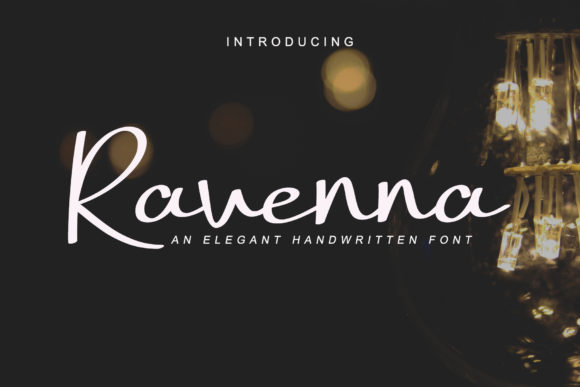
To understand why Ravenna works so well, you have to look at its anatomy. As a script font, it mimics the flow of handwriting, but Ravenna does so with a level of polish that elevates it above a casual handwritten font. It is classified as an elegant script, meaning it balances fluidity with structure. The letterforms often feature subtle swashes and a rhythmic baseline that suggests movement without sacrificing readability. It doesn’t scream for attention with chaotic loops; instead, it whispers with confidence.
In the world of modern typography, the personality of a typeface dictates how a message is received. Ravenna strikes a delicate balance. It feels approachable and intimate, yet it retains a professional edge. This makes it a premium font choice for projects that need to feel personal but not sloppy. It avoids the overly formal stiffness of traditional calligraphy scripts while steering clear of the messy, illegible nature of grunge fonts. The result is a typeface that feels curated and intentional.
Strategic Application: Where Ravenna Shines
Knowing where to deploy a font like Ravenna is just as important as choosing it. Because it is a display font rather than a body text workhorse, its primary role is to capture attention and set a mood. It is a powerful tool for logo design, particularly for brands that want to communicate elegance, care, or artisanal quality. Imagine a boutique bakery, a high-end wedding planner, or a bespoke jewelry maker; Ravenna fits seamlessly into these visual identities, helping to build a cohesive brand identity that feels luxurious and inviting.
However, its utility extends far beyond logos. In packaging design, Ravenna can be used to highlight product names or special features on a label, drawing the consumer's eye to the most important information. For editorial design, it serves as a stunning choice for pull quotes, chapter titles, or magazine headers, breaking up the monotony of standard serif font or sans serif font blocks. It adds rhythm to the page layout, guiding the reader's eye through the content hierarchy.
Digital creators will find Ravenna equally useful. In web design, it can be used sparingly for hero sections or call-to-action buttons to add a splash of personality. On social media graphics, where you have only a split second to stop a user from scrolling, the elegance of Ravenna can act as a visual hook. It is a creative font that helps content creators, bloggers, and influencers stand out in a crowded digital landscape by adding a layer of sophistication to their visual storytelling.
Building Visual Hierarchy and Brand Perception
Typography is the architecture of information. When you introduce Ravenna into a design, you are making a deliberate choice about visual hierarchy. By using this script for headings or key phrases, you instantly separate the most critical information from the supporting details. This contrast—often created by pairing Ravenna with a clean, geometric sans-serif—helps readers navigate content effortlessly. It ensures that your message isn't just read; it is felt.
The psychological impact on brand perception is significant. Fonts carry cultural baggage and emotional triggers. A stiff, blocky font might imply corporate efficiency, but Ravenna implies care, craftsmanship, and attention to detail. For small business owners and entrepreneurs, using a typeface like Ravenna can signal to customers that they are purchasing something made with intention. It helps build recognition and consistency across various touchpoints, from a website header to a thank-you card inserted into a package.
Practical Guidance for Designers and Creators
If you are considering adding Ravenna to your library, there are practical steps to ensure you get the most out of it. First, evaluate the fit. Does the project require a sense of warmth or luxury? If the answer is yes, Ravenna is likely a strong contender. However, if you are designing a technical manual or a legal document, the elegance of the script would be out of place.
Next, focus on font pairing. This is crucial. Because Ravenna has a strong personality, it needs a partner that is willing to play a supporting role. A neutral sans serif font is usually the best companion. Look for typefaces with low contrast and simple forms to let Ravenna take center stage. Avoid pairing it with other decorative fonts, as this will create visual clutter and confuse the viewer.
When working with any commercial font, you must review the technical aspects. Check the character map for Ravenna. Does it include a full set of punctuation? Does it support multiple languages? Look for OpenType features, such as stylistic alternates or ligatures, which allow you to customize the look of the text for specific words, adding even more uniqueness to your design assets.
Readability is another key consideration. While Ravenna is designed for clarity, script fonts generally have lower readability scores than standard serif fonts or sans-serifs when used in long paragraphs. Always test your layouts at the intended viewing size. A headline on a poster needs to be legible from a distance, while a watermark on an invitation can be more subtle. Always ensure your text color contrasts sufficiently with the background to maintain legibility.
Licensing and Integration
Finally, pay close attention to the licensing. As a premium font, Ravenna comes with specific terms of use. Whether you are a freelancer working on client projects or a business owner creating internal materials, ensure your license covers the intended usage. Some licenses are based on the number of users (seats), while others are based on the number of views for a website or the number of physical products for merchandise.
By treating Ravenna not just as a file to install but as a strategic component of your brand identity