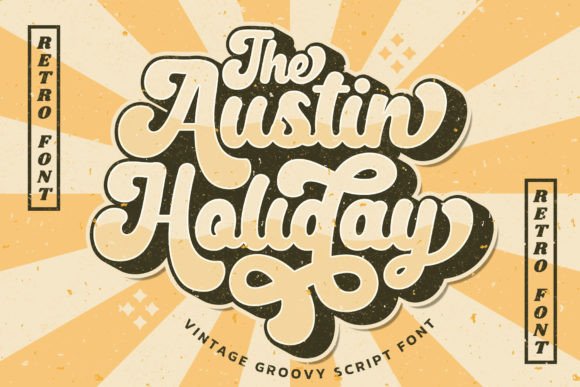
Austin Holiday: Your Go-To Font for Retro Playful Designs
Every so often, a typeface comes along that doesn't just sit on a page—it performs. It carries a distinct personality, a whisper of a bygone era, and an undeniable charm that can instantly elevate a project. Austin Holiday is precisely that kind of creative asset. More than just a collection of letters, it's a retro and playful script font designed to inject stylish character and a sense of fun into your work. If you've been searching for a way to make your designs feel more personal, nostalgic, and vibrant, you've likely just found your new favorite tool.
The Personality and Visual Appeal of Austin Holiday
At its core, Austin Holiday is a script font with a clear mid-century influence. Think of the playful lettering on vintage postcards, classic diner signage, or the titles of old travel posters. The letterforms are fluid and connected, mimicking the natural flow of a sign painter's brush. This gives it an authentic, hand-crafted feel that digital, geometric fonts often lack. It’s not overly formal or rigid; instead, it embraces slight imperfections that add to its human touch.
What truly sets this premium font apart is its versatility within that retro niche. It balances elegance with a playful energy. The swashes and alternate glyphs are key to this. Because Austin Holiday is PUA encoded, every stylistic flourish, ligature, and extra character is easily accessible, even in basic design software. This allows you to customize the look dramatically—from a simple, flowing signature to a highly ornate display piece. It’s a display font that commands attention in headlines and logos, yet its inherent readability at larger sizes makes it practical for short, impactful statements.
Where Austin Holiday Truly Shines
Understanding a font's personality is one thing; knowing where to deploy it is where the real strategy comes in. Austin Holiday isn't a one-size-fits-all solution, but for the right project, it's transformative.
Branding and Logo Design
For brands aiming for a friendly, approachable, and slightly nostalgic identity, this typeface is a goldmine. Imagine a craft brewery logo, a boutique coffee roaster, a vinyl record shop, or a handmade jewelry brand. Austin Holiday instantly communicates authenticity and a focus on quality craftsmanship. It helps build a brand identity that feels warm and inviting, standing out from the cold, minimalist aesthetics that dominate so much of modern design. Pair it with a clean, simple sans serif font for body text to create a beautiful contrast that is both readable and full of character.
Marketing and Social Media
In the fast-scrolling world of social media, stopping power is everything. Use Austin Holiday for social media graphics to create eye-catching quotes, sale announcements, or event promotions. Its playful style is perfect for Instagram stories, Pinterest pins, and Facebook ads that need to feel personal and engaging. It cuts through the visual noise, offering a refreshing break from standard corporate typefaces. For editorial design in digital magazines or blogs, it can be used for pull quotes or section headers to add a touch of flair without overwhelming the reader.
Print and Packaging
The retro charm of Austin Holiday translates beautifully to physical products. It's an excellent choice for packaging design—think labels for artisanal foods, craft spirits, or boutique cosmetics. On wedding invitations, event stationery, and greeting cards, it adds a layer of elegance and celebration. Its legibility in print, when used appropriately for headlines, makes it a reliable component of any designer's toolkit for print design projects.
Practical Guidance for Using This Creative Font
Choosing a creative font like Austin Holiday is just the first step. Using it effectively requires a bit of thoughtful application.
- Evaluate Project Fit: Before you even type a word, ask: does this project call for a playful, retro aesthetic? Austin Holiday is perfect for a children's book title, a vintage-themed wedding, or a food blog logo. It would be less appropriate for a serious financial report or a medical journal. The font should always serve the message, not compete with it.
- Master Font Pairing: This is where design magic happens. As a script font, Austin Holiday naturally pairs well with more neutral typefaces. A classic serif font like Garamond or a clean sans serif font like Montserrat can provide the perfect stable foundation for body copy, allowing the script to shine in headlines. Avoid pairing it with other overly decorative or handwritten fonts, which can create visual chaos.
- Test for Readability: While beautiful, script fonts can be challenging to read in long paragraphs or at very small sizes. Use Austin Holiday for short bursts of text: logos, headings, subheadings, and callouts. For extended reading, always opt for a highly legible serif or sans serif. Always test your designs at the intended viewing size, whether on a mobile screen or a printed poster.
- Explore the Full Glyph Set: Don't just settle for the default letters. Dive into the character map to access the swashes, ligatures, and alternates. Swashing a capital 'A' or a lowercase 'h' can completely change the word's rhythm and feel. This is where you move from using a font to truly designing with it.
- Understand the License: Austin Holiday is a commercial font. This means you're not just getting a beautiful design asset; you're getting the legal right to use it in client projects, products for sale, and commercial branding. Always review the specific license details to ensure your use case is covered, which is a mark of professionalism for any designer or business owner.
In the end, a typeface like Austin Holiday is more than just a design asset; it's a storyteller. It carries a mood, evokes a memory, and sets a scene before a single word is read. By understanding its strengths and applying it with intention, you can harness its retro charm to create designs that are not only visually striking but also deeply resonant with your audience. It’s a powerful reminder that in the world of modern typography, personality is often the most valuable feature of all.